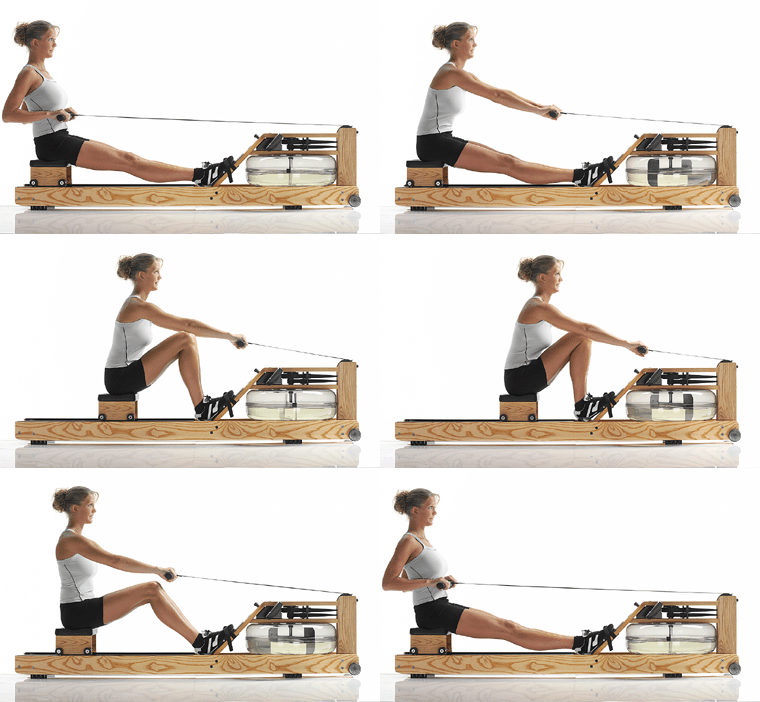
Technique drills break the stroke down into constituent parts to separate out each movement. Four drills (tabs on the left) are particularly useful, please review before moving on to the next lesson:
Fixed-seat (Arms & Body Only) Rowing Drill
The fixed-seat or arms and body only rowing drill ensures there is no leg action when moving from the release position through the rocked over phase to the rocked over position.
This drill improves smoothness of the transition from drive to return. It is also very helpful in correcting and improving posture by rocking from the pelvis and not bending from the lower back.
Instructor Tip: Stopping the drill at the rocked over position Check Point encourages the hands to flow smoothly throughout the transition from the release position through the rock-over phase. It also allows the user to concentrate on the body rock over from the hips and not the lower back.
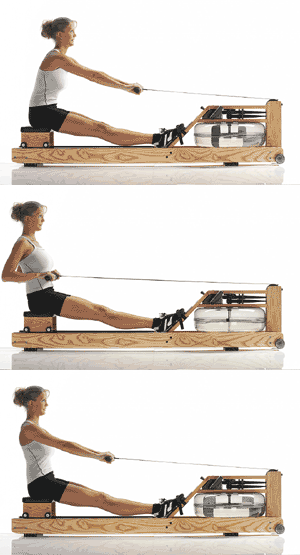
Catch Drill
The catch drill isolates the leg action at the beginning of the drive.
Practice shoulder relaxation and leg-back co-ordination by moving back and forth between the catch position and the beginning of the drive.
Concentrate on feeling the connection of the paddle in the water as it “locks on”, with the arms and shoulders staying still as the legs start to drive down. In this phase of the stroke, the legs do everything, so the body angle should stay the same and the arms should be straight throughout the exercise.
This drill can be tricky to teach.
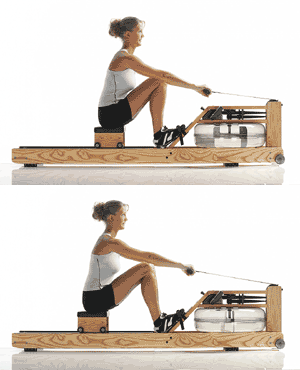
Slide Drill
Slide drill commences with arms only rowing, then fixed-seat or arms & body only rowing, then the slide (or legs) are gradually included, beginning with half slide (half leg compression)) and finally full slide (full leg compression). This drill is particularly useful for teaching people correct technique in steps.
Arms Only Rowing: Arms Only Rowing drill is rowing using only the arms, the legs are kept in a straight position (knees can be bent slightly if more comfortable) and the body remains still.
Fixed Seat or Arms & Body Only Rowing: as with arms only rowing above, the legs are kept straight and the body is rocked over from the pelvis. Only the upper body and arms are used.
Half slide: at the rocked over checkpoint, the knees break and the legs are allowed to compress to about half slide (the recovery checkpoint). The drive is commenced from the recovery checkpoint
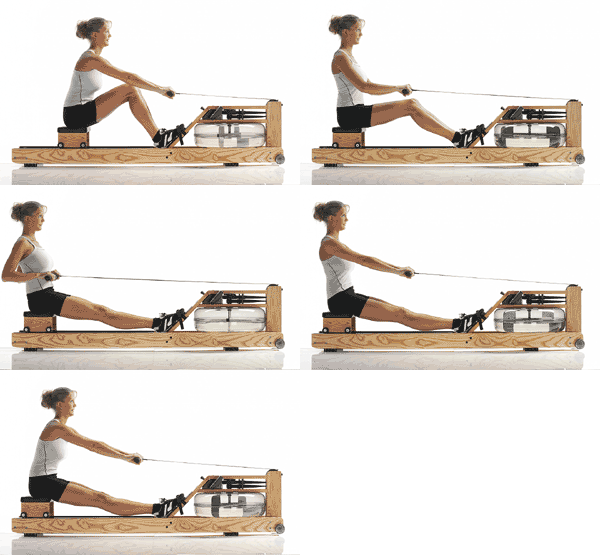
Full slide: concentrating on maintaining the above sequence of movement, the legs compress fully reaching the catch checkpoint.
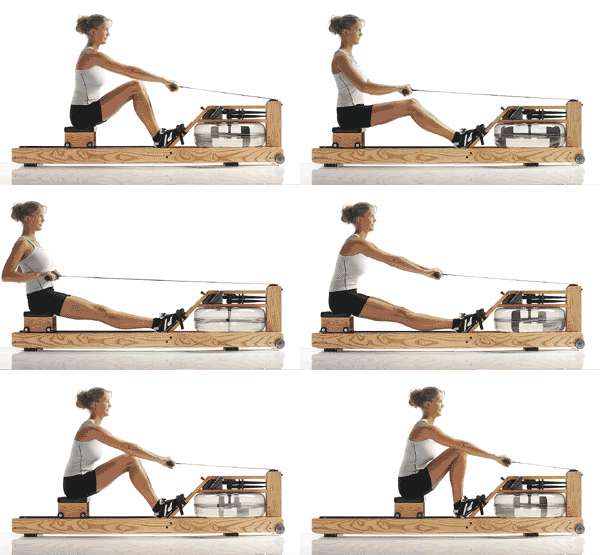
Slide work combines the different slide length drills together so that the user gradually builds up to full side and then builds down to no slide. This embeds the elements of technique into the full slide action. Practicing each slide length for a minute or so and then returning to full-range rowing enables you to feel the effect of each drill on your co-ordination.
An examples of using the slide drill when warming up is:
- 20 strokes at no slide
- 20 strokes at half slide
- 20 strokes at full slide
- 20 strokes at half slide
- 20 strokes at no slide
Slow Slide Drill
The slow slide drill entails a slow (to very slow) return to the catch with the intention of over emphasizing relaxation and posture during the recovery. The slow slide drill improves slide control, enhancing ratio and rhythm. The ratio of work to recovery can be increased to 1:3 or 1:4.
Instructor Tip: Over emphasizing the slowness of the recovery can assist in the perception of control.